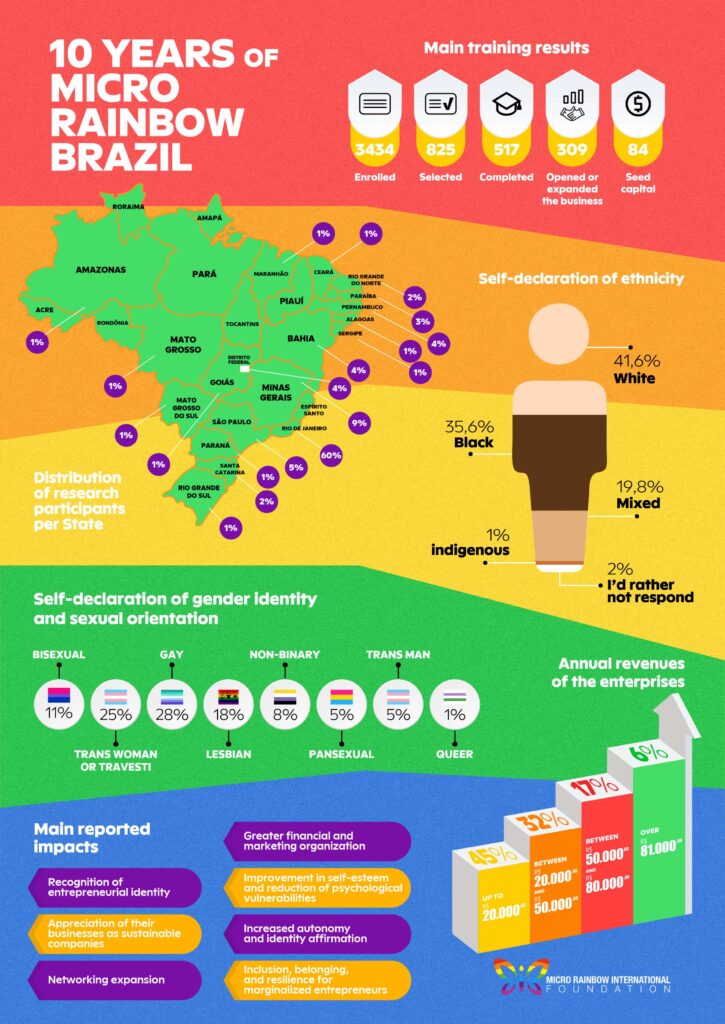

Micro Rainbow International Foundation (MRIF) is proud to share the findings of its new research report “10 Years of Micro Rainbow Brazil”. This comprehensive study delves into the experiences, challenges, and successes of LGBTQI+ entrepreneurs who have benefited from MRIF’s initiatives and those of our partner, Diversità Consultoria, in Brazil. The report not only celebrates a decade of transformative work but also provides invaluable insights to guide future interventions and strategies.
A Decade of Impact: Reaching and Empowering the Community
Since 2015, MRIF has been dedicated to strengthening small businesses and transforming the lives of LGBTQI+ individuals in Brazil. Through 11 entrepreneurship trainings, 3 acceleration programmes, and two specialized programmes (one focused on trans entrepreneurs and the other on entrepreneurs above 50 years old), MRIF has:
- Provided intensive training to 825 participants;
- Empowered 517 to complete their training;
- Supported the opening or expansion of 309 small businesses;
- Granted seed capital and small grants to 84 beneficiaries.
These numbers represent real change, generating positive impacts within the LGBTQI+ community and beyond.
Key Findings: Challenges and Strengths
The research, which involved surveying 101 graduates of MRIF’s training programmes, revealed critical insights into the LGBTQI+ entrepreneurial landscape in Brazil:
- Diversity and Intersectionality: The LGBTQI+ entrepreneurial community is diverse in terms of age, race, gender identity, sexual orientation, and socioeconomic background. Intersectionality of social markers increases socioeconomic vulnerabilities.
- Financial Instability: A significant challenge is income irregularity, affecting the ability to plan for the future and invest in growth.
- Market Competitiveness: Smaller businesses often struggle to compete in crowded markets.
- Seasonality: Fluctuations in demand impact revenue and financial planning.
- Bureaucratic Barriers: Bureaucratic hurdles impede business formalization and access to crucial resources.
However, the report also highlighted key strengths:
- Strategic Partnerships: Strong community support networks foster collaboration.
- Loyal Clientele: Customers value diversity, representation, and local/small businesses.
- Adaptability: Entrepreneurs demonstrate resilience, creativity, and innovation.
Building an LGBTIQ+ entrepreneurial ecosystem
Findings of this research have revealed how the organisation’s work in the last decade has contributed to building an effective LGBTIQ+ entrepreneurial ecosystem for low-income individuals in Brazil. Said ecosystem has empowered them to improve their skills, strengthen the foundations of their businesses, and build pathways toward a more equitable and prosperous future. This holistic approach has yielded significant positive changes, including:
- Enhanced recognition of entrepreneurial identity;
- Increased appreciation of their businesses as sustainable companies, rather than simply temporary or supplementary sources of income;
- Expanded support networks and stronger professional connections within the LGBTQI+ entrepreneurial community;
- Improved financial organisation and more effective marketing strategies;
- Enhanced self-esteem and reduced psychological vulnerabilities;
- Increased autonomy and stronger identity affirmation;
- Creation of safer and more inclusive spaces that foster a sense of belonging, resilience, and resistance for marginalized entrepreneurs.
Pathways to Progress: Recommendations for the Future
Based on the research findings, MRIF has identified several key recommendations to enhance its impact and support the sustainable growth of small LGBTQI+ entrepreneurs, including:
- Offer specialized technical tracks in areas like digital marketing and accounting;
- Implement extended, sector-specific mentoring programmes;
- Offer leadership and pitch development labs;
- Conduct practical business planning and financial forecasting workshops;
- Integrate financial support (grants, loans) with financial literacy training and mentorship;
- Increase networking opportunities for small entrepreneurs.
This research underscores the transformative potential of MRIF’s work and provides a roadmap for future initiatives. MRIF remains deeply committed to empowering LGBTQI+ entrepreneurs in Brazil, fostering a more equitable and prosperous future for all.