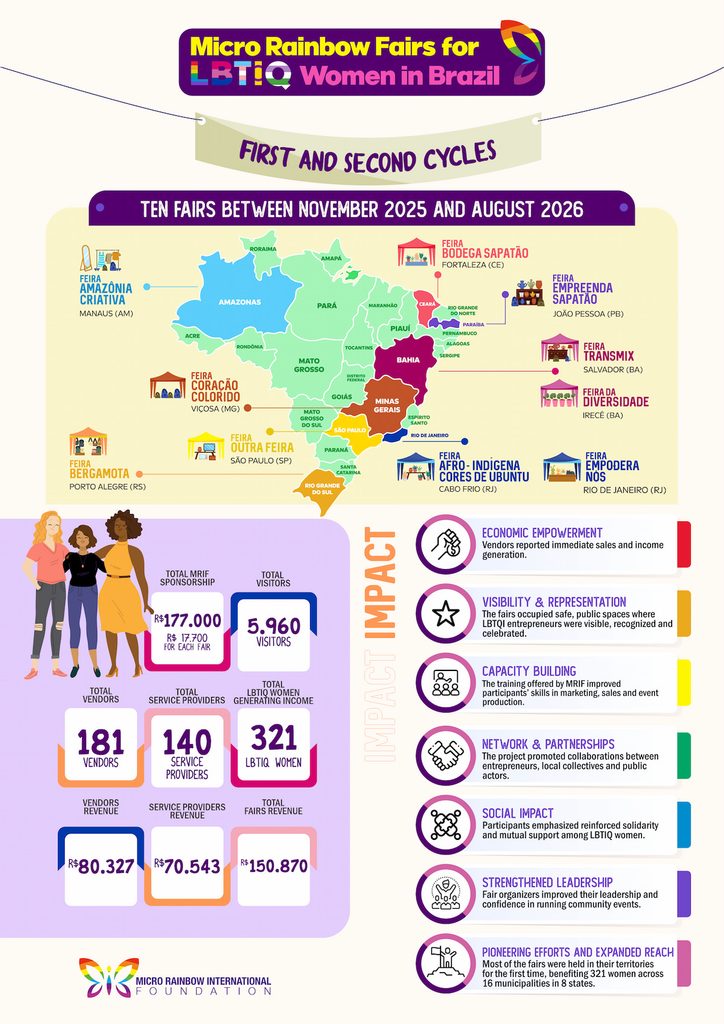
Ten fairs held between November 2025 and August 2026 welcomed nearly 6,000 visitors and generated more than R$150,000 in direct income for 321 LBTQI+ women.
Micro Rainbow International Foundation’s second cycle of small business fairs for LBTQI+ Women in Brazil brought together entrepreneurs, artists, service providers, and local communities at five fairs held between July and August 2026.
The fairs took place in Viçosa, Rio de Janeiro, São Paulo, Irecê, and Fortaleza. Together, they welcomed an estimated 2,560 visitors and generated R$83,776.17 in direct income for LBTQI+ women: R$41,215.17 in exhibitor sales and R$42,561 in remuneration for service providers. In total, 146 women benefited directly, well above the project’s target of 100. The cycle supported 96 exhibitors and 50 service providers, while bringing the initiative to five states.
Income, opportunity, and connections
For many participants, the fairs offered more than a sales opportunity. Exhibitors reported receiving new orders and service bookings, gaining social media followers, and building partnerships. Some took part in a small-business fair for the first time; others returned after stepping back because of mental health challenges or a lack of safe, free spaces.
The fairs also helped strengthen connections between LBTQI+ entrepreneurs. Organisers described them as more than standalone events: they created opportunities for collaboration and laid the groundwork for future fairs, collective initiatives, and even digital platforms showcasing services offered by LBTQI+ women.
Local leadership in public spaces
Each fair was led by a local organiser, with support from Micro Rainbow Brazil’s team. Through planning, outreach, negotiations, and partnerships, organisers developed their leadership and decision-making skills, and built confidence in representing their communities.
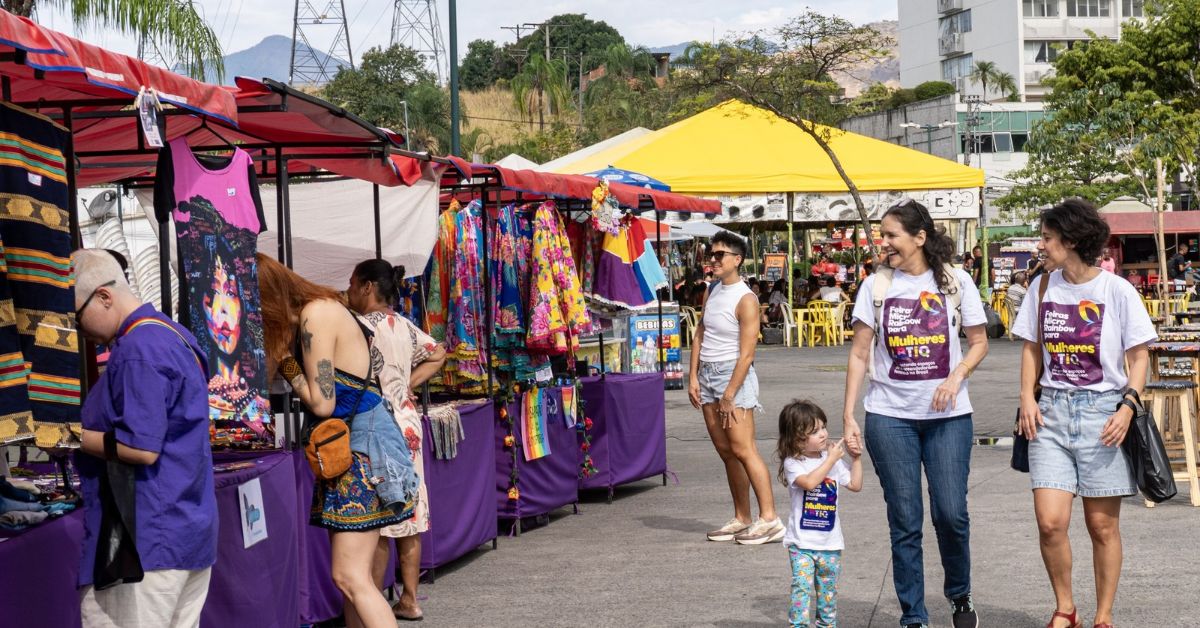
The fairs also made LBTQI+ women’s presence visible in public squares, cultural venues, and other prominent locations. Events at places such as Parque de Madureira in Rio de Janeiro, Centro Cultural Belchior in Fortaleza, and Praça Chico Mendes in Irecê brought together commerce, culture, and community visibility.
The project reached beyond major cities, too. Fairs in Viçosa and Irecê drew exhibitors from neighbouring municipalities, extending opportunities to women in smaller and more remote communities. Across the cycle, participants came from 16 municipalities in five Brazilian states.
The cycle’s results were supported by public-sector assistance, partnerships with LGBTQI+ organisations, careful exhibitor selection, social media promotion, and strategic venue choices. Fair organisers also valued the Micro Rainbow team’s practical support, including work-plan reviews, financial mentoring, checklists, and clear reporting requirements.
Building on two cycles of work
Cycle 2 built on the first phase, in which five fairs generated nearly R$68,000 in direct income for 175 LBTQI+ entrepreneurs, artists, and service providers. Across both cycles, Micro Rainbow has trained 20 women and co-produced 10 fairs in Brazil, benefiting 321 women and generating R$150,870.71 in direct income. Together, these fairs drew an estimated 5,960 visitors.
The figures tell one part of the story. The fairs also created opportunities for women to strengthen businesses, develop networks, lead community events, and be seen as producers and contributors to local life.
Micro Rainbow’s experience shows how entrepreneurship support can extend beyond individual businesses. With training, financial investment, and sustained technical support, LBTQI+ women can build income while shaping more inclusive and connected communities.
We invite you to read Thalyne, Mica and Brenda’s stories which highlight how the project generated income, widened networks, and helped women claim visibility and leadership in their own regions.